Application Simulations
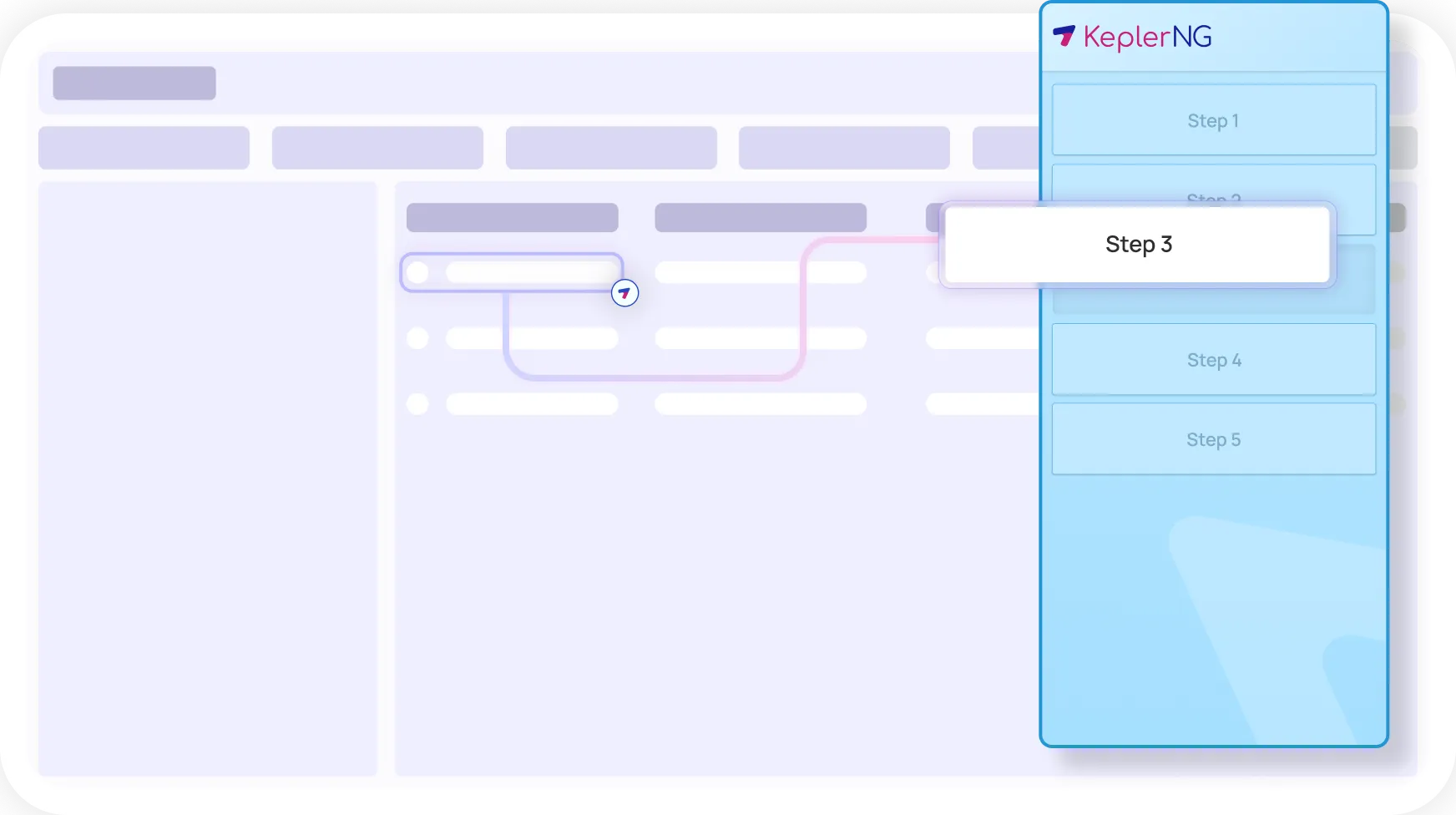
Simulation-based learning builds software proficiency and drives adoption at scale. By creating immersive, risk-free environments, learners practice real workflows, make decisions, and develop muscle memory before using live systems. Unlike passive demos, simulations demand active participation and accelerate skill acquisition thereby reducing errors and boosting confidence. When designed with both training and assessment capabilities, simulations become versatile tools that support the entire learning journey from exploration to certification-ready competency validation.
Core Simulation Capabilities
Guided Practice
The simulations replicate real application interfaces with pixel-level accuracy using HTML5, whether Salesforce dashboards, Microsoft Excel functions, other Microsoft Office features, or industry-specific healthcare and financial platforms. As users navigate these environments, contextual hints and instructional scaffolding appear at critical decision points. The simulations recognize multiple valid pathways to complete tasks, so learners aren't forced into rigid click-sequences that don't match how people actually work with software.
Performance Validation
When used as assessment, simulations function as evaluation tools without hints or guidance. The system captures every action, measures task completion accuracy, tracks time-to-completion, and identifies specific skill gaps. This provides granular performance data across competencies.
Real-World Readiness
Browser-based delivery enables simulations to run across desktop, tablet, and mobile devices with no installation required. Integration via custom APIs or standard LTI/SCORM allows deployment within existing learning ecosystems and enterprise systems. Multi-device support and flexible integration make these simulations particularly effective for distributed teams and large-scale enterprise deployments.
Deployment Models
Simulation-based training proves particularly effective for new software rollouts, where organizations need to onboard hundreds or thousands of users quickly without disrupting live systems. Compliance certification programs use simulations to verify that learners can execute regulated workflows correctly before granting system access. Role-based onboarding simulations accelerate time-to-productivity for new hires in sales, customer service, or administrative functions by providing job-specific practice environments. Product adoption initiatives leverage simulations to drive feature utilization and reduce reliance on help desk support. Projects typically range from focused 10-minute task workflows to comprehensive multi-hour certification programs.
KeplerNG
Precision testing and assessment
Transform how students and professionals learn software skills with KEPLER's interactive simulation technology.
Find out more